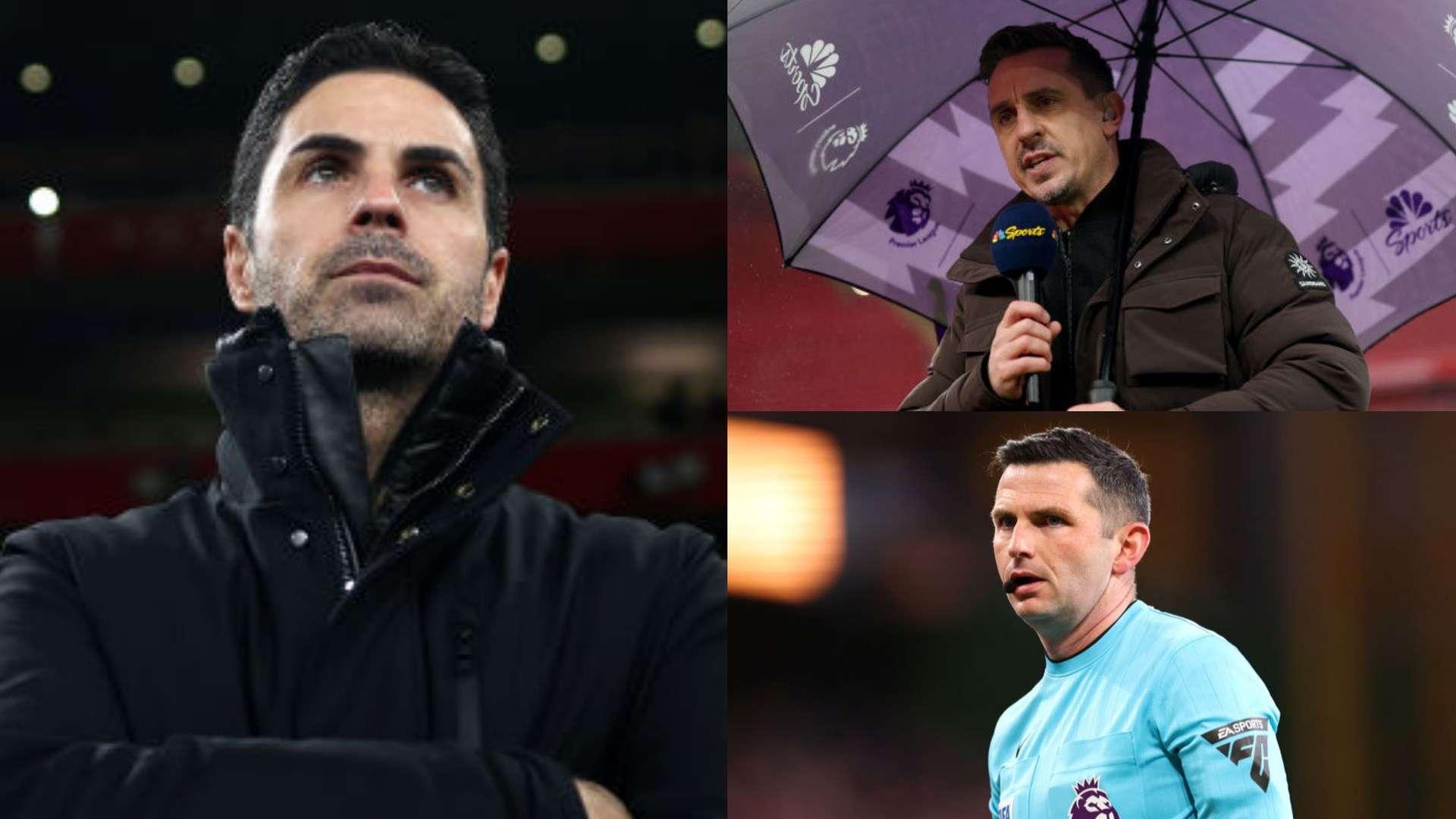
In recent weeks, tensions have been running high among Arsenal supporters, with many expressing their frustration and anger at what they perceive to be unfair treatment from match officials. This sentiment has been further fueled by Arteta’s own comments, which have been interpreted by some as suggesting that referees are “corrupt” in their decisions against Arsenal.
Neville, who now works as a football pundit, has taken a strong stance in defense of the referees, particularly highlighting the abuse directed towards official Michael Oliver following a recent match. The former player turned commentator has called for a more measured and respectful approach towards referees, emphasizing the importance of supporting them in their difficult and often thankless task of officiating top-level football matches.
Despite the backlash from Arsenal fans and some members of the media, Neville has remained steadfast in his support of the referees and has urged all parties involved to focus on improving the overall quality of the game rather than engaging in divisive and inflammatory rhetoric.
The debate over the role of referees in football is nothing new, with controversies and disputes over officiating decisions cropping up regularly in the sport. However, the recent escalation of tensions between Arsenal fans, Arteta, and Neville has brought the issue to the forefront once again, prompting a wider discussion about the responsibilities of managers and pundits in shaping public perception of referees.
As the debate rages on, it is clear that a more nuanced and balanced approach is needed in order to address the concerns of fans while also upholding the integrity and impartiality of the game. Ultimately, all parties involved must work together to ensure that football remains a fair and enjoyable sport for players, fans, and officials alike.
In the midst of this ongoing controversy, it is crucial for all stakeholders to remember the values of respect, sportsmanship, and fair play that form the foundation of football. By promoting a culture of mutual understanding and cooperation, we can strive to create a more positive and inclusive environment for all involved in the beautiful game. Let’s hope that this latest controversy serves as a catalyst for positive change and progress in the world of football.
The Impact of Referee Decisions on Football Clubs
One of the key issues that have surfaced in the debate surrounding referees and their decisions is the impact it can have on football clubs. Controversial calls or perceived biases can not only affect the outcome of individual matches but also have broader implications for a team’s overall performance and standings in the league.
For Arsenal, a club with a passionate fan base and high expectations, the scrutiny of referee decisions can add to the pressure already faced by the players and coaching staff. The belief in a perceived bias against the club can create a sense of injustice and frustration that may impact the morale and confidence of the team on the pitch.
Furthermore, the public statements made by managers like Arteta can influence the mindset of the players and fans, shaping their perceptions of the fairness of the game. If a narrative of referee bias takes hold within a club, it can become a self-fulfilling prophecy, affecting the collective mindset and performance of the team.
In this context, the role of pundits like Gary Neville becomes crucial in shaping public opinion and steering the conversation towards a more constructive and respectful dialogue. By advocating for a balanced view that acknowledges the challenges faced by referees while also holding them accountable for their decisions, pundits can help foster a culture of understanding and fair play within the football community.
Building Trust and Transparency in Officiating
The debate over referee decisions is not just about individual matches or clubs; it is also about the broader integrity of the game. Trust in the fairness and impartiality of referees is essential for upholding the credibility of football as a sport.
To address the concerns raised by fans and stakeholders, there is a growing call for greater transparency in the officiating process. Technologies like VAR (Video Assistant Referee) have been introduced to provide more clarity and accuracy in decision-making, but there is still room for improvement in how these tools are implemented and communicated to the public.
Moreover, efforts to enhance training and support for referees can help improve their performance and reduce the likelihood of errors or biases creeping into their decisions. By investing in the professional development of referees and promoting a culture of accountability and transparency, football authorities can build trust and confidence in the officiating process.
Fostering a Positive and Inclusive Football Environment
At the heart of the debate over referee decisions lies a broader question about the values that underpin the footballing community. Respect, sportsmanship, and fair play are not just empty slogans; they are the principles that define the spirit of the game and shape the experiences of players, fans, and officials alike.
In navigating the complexities of the current controversy, it is essential for all stakeholders to uphold these values and work towards creating a more positive and inclusive environment for everyone involved in football. By promoting mutual understanding, respect, and cooperation, we can ensure that the beautiful game remains a source of joy and inspiration for generations to come.
As the dialogue continues and new perspectives emerge, let us seize this opportunity to reflect on our shared responsibility in upholding the integrity and spirit of football. By embracing a culture of openness, humility, and collaboration, we can move towards a future where fairness, respect, and sportsmanship reign supreme on and off the pitch. Let’s make this latest controversy a turning point for positive change and progress in the world of football.