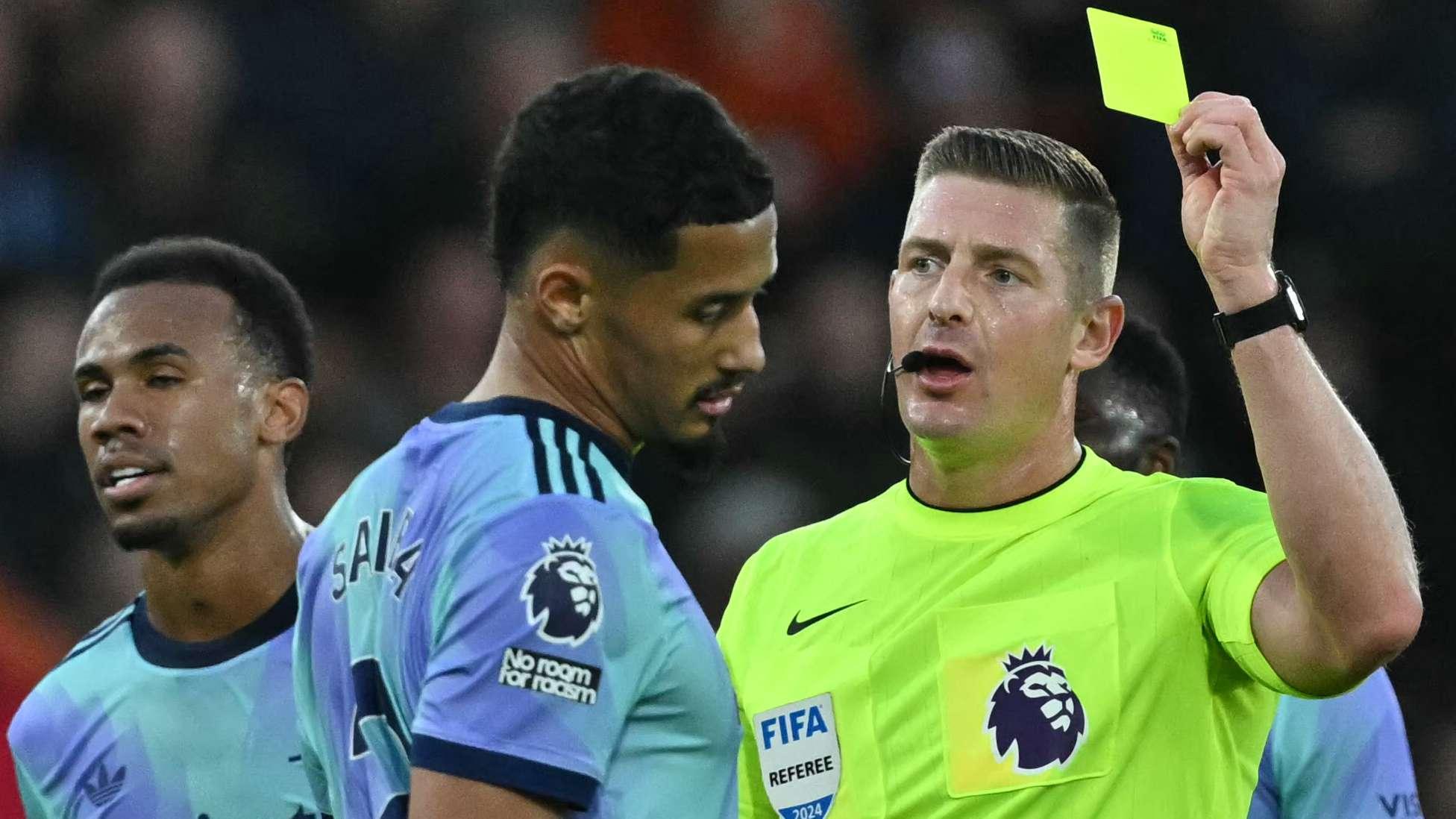
Former Premier League Referee Mark Halsey Slams VAR Decision Leading to Saliba’s Red Card
In a recent match between Bournemouth and Arsenal, controversy struck as William Saliba received a red card following a VAR intervention. The decision to change Saliba’s yellow card to a red has sparked criticism from former Premier League referee Mark Halsey.
VAR Decision Under Scrutiny
Mark Halsey, a respected figure in the world of football officiating, took issue with the VAR intervention that ultimately led to Saliba’s sending off. The controversial decision not only impacted the outcome of the match but also raised questions about the consistency and accuracy of VAR technology in football.
Halsey’s comments have reignited the ongoing debate surrounding the use of VAR in the sport. Critics argue that while VAR was intended to minimize errors in refereeing decisions, it has sometimes introduced new sources of controversy and confusion.
Match Recap: Bournemouth vs. Arsenal
The match between Bournemouth and Arsenal ended in a 2-0 victory for the home team, with Saliba’s red card playing a significant role in the outcome. Despite Arsenal’s efforts to overcome the deficit, Bournemouth’s solid defense and strategic gameplay secured them a crucial win.
Saliba’s controversial red card not only affected the match but also raised concerns about the impact of VAR on the overall integrity and fairness of football competitions. Fans and analysts alike have been quick to voice their opinions on the matter, with many calling for a review of VAR protocols to prevent similar incidents in the future.
Looking Ahead
As the football community grapples with the aftermath of the VAR controversy in the Bournemouth vs. Arsenal match, questions remain about the future of officiating in the sport. With technology playing an increasingly prominent role in decision-making, it is essential for stakeholders to address the challenges and limitations of VAR to ensure fair and consistent outcomes on the field.
While VAR has undoubtedly brought about positive changes in the way referees officiate matches, its implementation has not been without flaws. The Saliba incident serves as a reminder that there is still work to be done to refine the use of technology in football and uphold the spirit of fair play.
As the debate over VAR in football continues, it is clear that the issue of officiating and decision-making will remain a topic of discussion for the foreseeable future. With stakeholders, players, and fans all invested in the outcome, finding a balance between technology and tradition will be crucial in shaping the future of the sport.
For more football news and updates, stay tuned to our website and follow us on social media for the latest developments in the world of football.
Analysis of VAR Controversy
Mark Halsey’s criticism of the VAR decision in the Bournemouth vs. Arsenal match sheds light on the challenges faced by referees and officials in modern football. The introduction of VAR was intended to reduce errors and increase the accuracy of decisions, but incidents like the one involving Saliba highlight the complexities of implementing technology in a sport where split-second judgments can have significant consequences.
One of the main issues with VAR is the interpretation of subjective decisions, such as fouls and misconduct. While technology can provide additional angles and slow-motion replays, the final decision still rests with the on-field referee or VAR officials. This subjective element can lead to inconsistent outcomes and fuel debates about fairness and transparency in officiating.
Furthermore, the reliance on VAR for all major decisions in football has raised concerns about the flow and pace of the game. Delays in decision-making, as seen in the Bournemouth vs. Arsenal match, can disrupt the rhythm of play and impact the overall excitement and entertainment value of the sport.
Impact on Players and Teams
The Saliba incident not only affected the outcome of the match but also had broader implications for both Arsenal and Bournemouth. For Saliba, receiving a red card under controversial circumstances could dent his confidence and reputation as a player, affecting his performance in future games.
On the other hand, Bournemouth’s victory, albeit tarnished by the VAR controversy, could provide them with a much-needed morale boost and momentum in their season. However, the lingering debate over the validity of the decision could overshadow their achievement and raise doubts about the integrity of their win.
The Future of VAR in Football
As the footballing world grapples with the challenges posed by VAR, there is a growing consensus that improvements are needed to enhance the technology’s effectiveness and credibility. Refinements in VAR protocols, increased transparency in decision-making processes, and better communication with fans and stakeholders are essential steps towards restoring trust in the system.
Moreover, ongoing discussions about the role of technology in football officiating highlight the need for a balanced approach that preserves the human element of the sport. While technology can provide valuable assistance to referees, it should not overshadow their judgment or diminish the spontaneity and emotion that make football a beloved pastime for millions of fans worldwide.
Conclusion
As controversies like the one involving Saliba continue to spark debates and discussions in the football community, it is evident that the evolution of VAR and officiating in the sport is a work in progress. Finding the right balance between technology and tradition, accuracy and subjectivity, will be crucial in shaping the future of football and ensuring that the integrity of the game is upheld for generations to come.
For the latest football news, analysis, and updates, be sure to follow our website and social media channels for comprehensive coverage of the beautiful game.