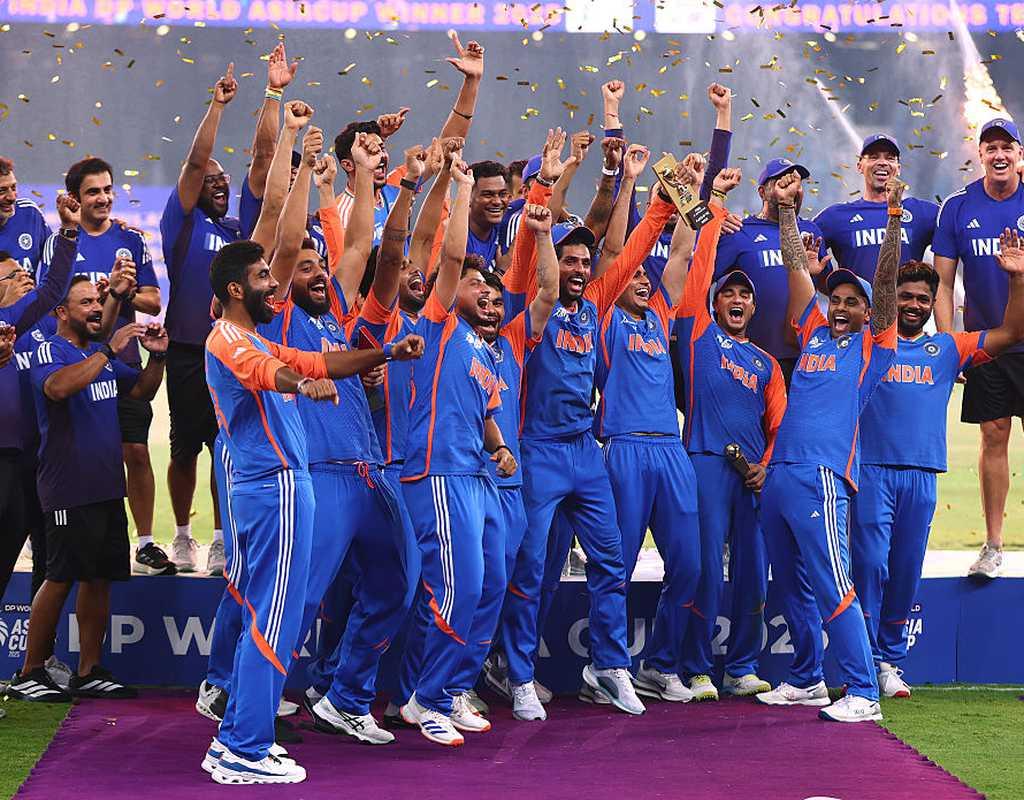
Indian Cricket Team Refuses Asia Cup Trophy in Controversial Standoff
The Indian cricket team made headlines after refusing to accept the Asia Cup trophy following their victory against Pakistan in the final match held in Dubai. The trophy was supposed to be presented by the Asian Cricket Council President and PCB chairman Mohsin Naqvi, who also serves as the Interior Minister for Pakistan.
Controversial Presentation Ceremony
Reports suggest that there was a standoff during the presentation ceremony as the Indian team declined to accept the trophy from Naqvi. Despite efforts to resolve the situation, the Indian team stood their ground, leading to the trophy being eventually removed from the ground before other presentations were made. In contrast, Pakistan accepted their runners-up medals from Aminul Islam, the BCB President.
While individual players like Tilak Varma, Kuldeep Yadav, and Abhishek Sharma received their rewards from sponsors, the Indian team as a whole did not accept their winner’s medals or the trophy.
India’s Captain Expresses Disappointment
In a post-match press conference, India captain Suryakumar Yadav expressed his disappointment at the turn of events. He emphasized the team’s hard work throughout the tournament and their belief that they deserved the trophy. Yadav highlighted the importance of the team and support staff as the real trophies, cherishing the memories made during the Asia Cup.
“This is one thing which I have never seen since I have started playing cricket, since I have started following cricket that a champion team is denied to get a trophy. That too a hard-earned one, it’s not like we got it easily,” said Yadav.
Following their victory, the Board of Control for Cricket in India announced a reward of INR 21 Crore for the players and support staff, showing their appreciation for the team’s efforts.
Looking Ahead
The controversial incident at the Asia Cup final has sparked discussions within the cricketing community, with many questioning the actions of both teams involved. Despite the trophy refusal, the Indian team continues to focus on their future matches and upcoming tournaments, determined to showcase their skills on the field.
As the cricketing world awaits further developments on this story, the Asia Cup controversy serves as a reminder of the passion and intensity that defines the sport, showcasing the rivalries and emotions that come with competitive cricket.
Impact of the Trophy Refusal
The refusal of the Asia Cup trophy by the Indian cricket team has stirred debates not only within the cricketing community but also among fans and analysts worldwide. The act of turning down a prestigious trophy in a high-profile event like the Asia Cup final has raised questions about sportsmanship, diplomacy, and the role of cricket in fostering international relations.
While some view the Indian team’s decision as a bold statement against political tensions between India and Pakistan, others criticize it as an inappropriate display of sportsmanship. The incident has highlighted the complexities of sports and politics intertwining, especially in the context of cricket matches between the two neighboring nations.
Symbolism of the Trophy
The significance of a sports trophy extends beyond its material value. Trophies symbolize achievement, recognition, and the culmination of hard work and dedication. By refusing to accept the Asia Cup trophy, the Indian team may have wanted to convey a message about the deeper values they hold dear, prioritizing integrity and principles over mere symbolic gestures.
At the same time, the act of rejecting the trophy could be seen as a missed opportunity to demonstrate sportsmanship and grace in victory, regardless of the geopolitical tensions surrounding the match. It is a reminder that sports can transcend boundaries and serve as a unifying force, bringing people together despite their differences.
Lessons Learned
Regardless of the controversies surrounding the trophy refusal, the incident offers valuable lessons for players, officials, and fans alike. It underscores the importance of sportsmanship, respect for opponents, and the spirit of competition in cricket and all sports. It serves as a reminder that actions on and off the field can have lasting consequences, shaping perceptions and attitudes towards the game.
Moving forward, it is essential for all stakeholders in cricket to reflect on the Asia Cup incident and strive to uphold the values that make the sport great. Whether through gestures of reconciliation, acts of kindness, or moments of camaraderie, cricket has the power to bridge divides and foster goodwill among nations.
Continued Focus on Performance
Despite the controversy surrounding the Asia Cup trophy refusal, the Indian cricket team remains steadfast in their commitment to excellence on the field. With upcoming matches and tournaments on the horizon, the team is focused on honing their skills, building team cohesion, and delivering stellar performances for their fans and supporters.
As they continue to train, strategize, and compete, the Indian team will strive to let their cricketing prowess do the talking, showcasing their talent and sportsmanship through their actions on the pitch. While the Asia Cup incident may have sparked discussions and debates, the team’s ultimate goal remains unchanged: to excel in the sport they love and make their country proud.
In conclusion, the Asia Cup trophy refusal by the Indian cricket team serves as a poignant moment in the sport’s history, prompting reflection, dialogue, and introspection. It underscores the complexities of cricket as more than just a game, but a platform for communication, expression, and unity. As the cricketing world watches with anticipation, the aftermath of this incident will undoubtedly shape the future of the sport and the values it represents.