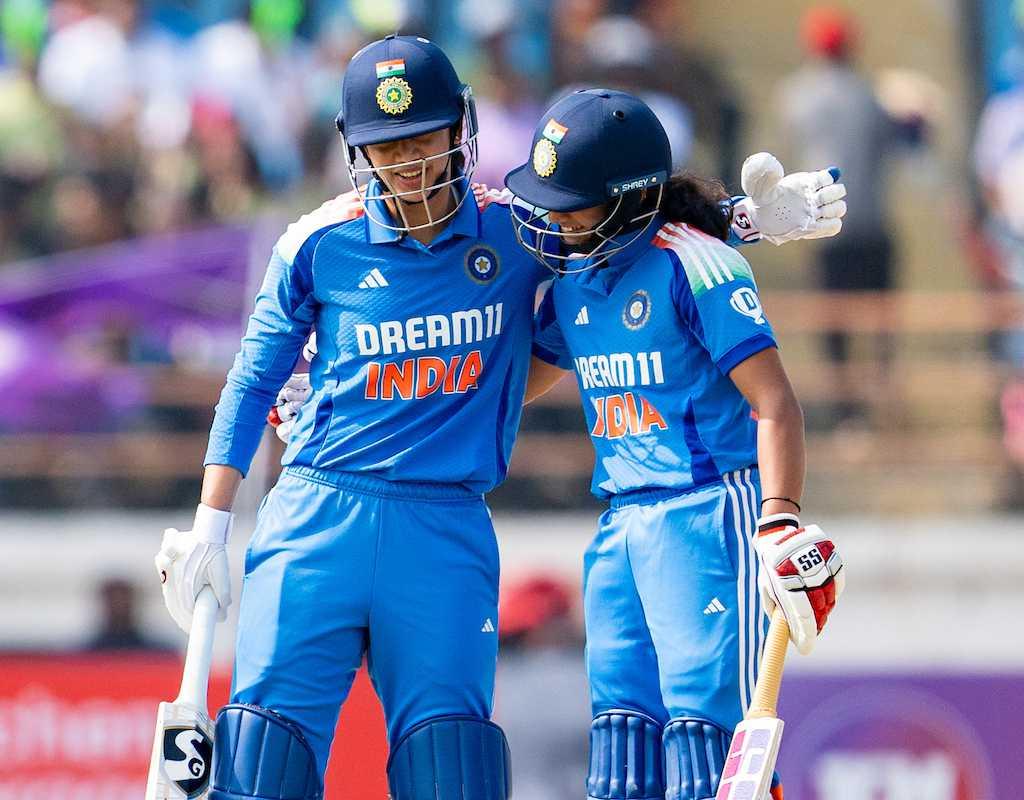
In the lead-up to the home World Cup, India’s women’s cricket team has been experimenting with new batting combinations, leading to promising results. One of the most significant finds has been the pairing of Pratika Rawal and Smriti Mandhana at the top of the order, who have managed an impressive run-rate of 6.05 in 19 ODIs together.
The inclusion of Rawal alongside Mandhana has brought a fresh dynamic to India’s batting line-up, providing stability and consistency to the opening partnership. Similarly, the return of Harleen Deol to the national side has seen her slot in at No. 3, a position that had witnessed frequent changes since Mithali Raj’s retirement.
The home series against West Indies and Ireland allowed Rawal and Deol to find their rhythm, with both players notching up their maiden ODI centuries. Their performances, combined with those of experienced batters like Harmanpreet Kaur and Jemimah Rodrigues, have strengthened India’s top-order significantly.
However, as tougher assignments against England and Australia approached, the cracks in the newly formed batting order began to show. Despite their impressive numbers, Rawal and Deol struggled in unfamiliar conditions and against stronger oppositions.
The statistics highlight the impact of the opening partnership on India’s overall performance. While Rawal and Mandhana boast a high run-rate together, the scoring rate notably drops when Mandhana is dismissed early. On the other hand, when Rawal falls first, the partnership between Mandhana and Deol thrives, showcasing the importance of a well-set top-order.
Deol’s cautious approach in the middle overs has been a point of discussion, with her tendency to consume dot balls often hampering the team’s momentum. Similarly, Rawal has shown vulnerability against quality spin bowling, leading to challenges in strike rotation and acceleration.
As India navigates through the ongoing World Cup, it is crucial for the team management to address these tactical and technical issues to optimize the performance of the top-order. The upcoming matches present an opportunity for India to fine-tune their strategies and ensure a more balanced and dynamic approach to batting.
With the right adjustments and a focus on consistency and intent, India’s women’s cricket team has the potential to make a strong impact in the remainder of the tournament. The combination of experience and talent within the team bodes well for their chances, provided they can overcome the challenges posed by top-quality oppositions. As the World Cup progresses, all eyes will be on how India’s new batting combinations rise to the occasion and deliver when it matters most.
India’s Women’s Cricket Team: Navigating New Batting Challenges
As India’s women’s cricket team continues to experiment with new batting combinations in the lead-up to the home World Cup, the team faces a series of challenges and opportunities that will shape their performance in the tournament. The recent success of the opening partnership between Pratika Rawal and Smriti Mandhana has been a highlight, showcasing the potential for stability and consistency at the top of the order. However, as the team faces tougher opposition, they must address key tactical and technical issues to optimize their performance.
The inclusion of Rawal alongside Mandhana has added a fresh dynamic to the batting line-up, but it has also brought to light certain vulnerabilities that need to be addressed. Rawal’s struggles against quality spin bowling and the tendency of Harleen Deol to consume dot balls in the middle overs have been points of concern. As the team faces challenges against top-quality oppositions like England and Australia, these issues must be resolved to ensure a balanced and dynamic approach to batting.
While the partnership between Rawal and Mandhana has shown promise with a high run-rate, the team’s performance significantly drops when Mandhana is dismissed early. This highlights the importance of a well-set top-order and the need for consistency in building partnerships. The recent performances of experienced batters like Harmanpreet Kaur and Jemimah Rodrigues have further strengthened India’s top-order, but the team will need to find the right balance to maintain momentum throughout the tournament.
As the ongoing World Cup progresses, the team management must focus on fine-tuning their strategies and addressing the challenges posed by stronger oppositions. The upcoming matches provide an opportunity for India to showcase their potential and make a strong impact in the tournament. With a combination of experience and talent within the team, India has the capability to excel, provided they can overcome the hurdles that come their way.
Ultimately, all eyes will be on how India’s new batting combinations adapt to the demands of the tournament and deliver when it matters most. The journey towards success in the World Cup will require a blend of tactical adjustments, technical precision, and mental resilience from the players. As India’s women’s cricket team navigates through the competition, their ability to overcome challenges and capitalize on opportunities will determine their success in the much-anticipated home World Cup.