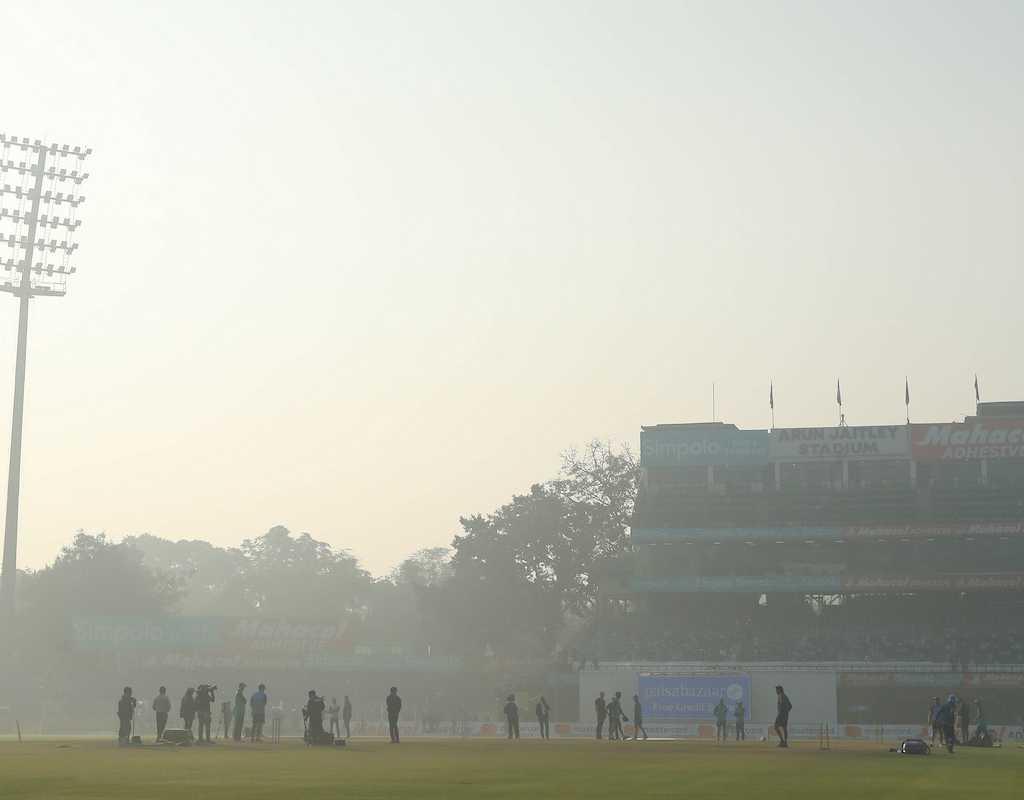
### The Pollution Issue ###
A member of the South African cricket team experienced a disturbing encounter with air pollution during a Test series in India back in 2015. While staying in a Delhi hotel, he was jarred awake by a rasping noise that turned out to be the sound of his own breathing amidst the high levels of pollution in the city. This incident shed light on the serious air quality problems that plague Delhi, especially during the months of November and December.
### The Impact on Players ###
During the 2015 Test series, South Africa’s players had to cope with the adverse effects of the polluted air. The team’s wicketkeeper, Dane Vilas, spent long hours on the field and at the crease, all while struggling to breathe in the polluted atmosphere. Many players had underlying health conditions such as asthma and hay fever, which were exacerbated by the pollution levels. The team’s manager and doctor, Mohammed Moosajee, worked tirelessly to ensure the players received necessary medical attention to manage their symptoms.
### The Controversial Pitch Conditions ###
The series was marred by controversy surrounding the pitch conditions, with accusations that the pitches were unfairly skewed in favor of the Indian team. This led to speculation that the BCCI may have been trying to protect Virat Kohli, who was captaining the Indian team for the first time in a Test series. The pitch conditions further escalated tensions between the two teams, with South Africa retaliating with a poorly prepared pitch in a later series against India.
### Looking Ahead to the Future ###
Despite the challenges faced during the 2015 series, South Africa is scheduled to return to Delhi for another Test match in November. The decision to play in Delhi again raises concerns about the players’ health and well-being amidst the city’s notorious air pollution. While the BCCI has not yet announced any changes to the venue, former South African coach Russell Domingo has voiced his concerns about playing in Delhi during the peak of the pollution season.
### A Shift to Guwahati ###
In a surprising move, the second match of South Africa’s series will be played in Guwahati, a city in the northeastern state of Assam. This decision has raised questions about the motive behind choosing a smaller city with no prior experience hosting a Test match. It is speculated that the change in venue could be linked to political factors, as Devajit Saikia, the BCCI secretary representing the ICC’s board, has ties to Guwahati.
### Conclusion ###
As South Africa prepares to face off against India in Delhi once again, the memories of the challenges faced during the 2015 series serve as a stark reminder of the importance of considering players’ health and safety in cricket. The upcoming Test match will undoubtedly be closely watched to see how the teams navigate the environmental and pitch conditions to deliver a thrilling and competitive game.
Historical Context of Cricket in Delhi
Delhi has a rich history when it comes to hosting cricket matches. The Feroz Shah Kotla stadium, located in the heart of the city, has been a renowned venue for Test matches and international cricket events. Over the years, Delhi has seen some memorable matches, including historic moments like Anil Kumble’s 10-wicket haul in an innings against Pakistan in 1999.
Environmental Concerns in Indian Cricket
The issue of air pollution in Delhi is not unique to cricket matches. Several sporting events in the city have been affected by poor air quality, leading to health concerns for athletes and spectators alike. The pollution levels in Delhi have often prompted discussions about whether outdoor events should be held in the city, especially during the winter months when pollution peaks.
The Significance of Guwahati as a Cricket Venue
Guwahati’s selection as a venue for the upcoming Test match holds symbolic importance in the context of spreading cricket to different parts of India. The move to host a match in a city that is not traditionally known for cricket showcases the sport’s growth and popularity across the country. This decision opens up opportunities for cricket fans in the northeastern region to witness top-level cricket firsthand.
Political Dynamics and Cricket in India
The intersection of politics and cricket is not uncommon in India. The choice of Guwahati as a venue for the Test match could be seen as a strategic move to promote cricket in the region and garner support for the sport. With the BCCI secretary having ties to Guwahati, there may be underlying motivations to expand the reach of cricket to different parts of the country, aligning with broader political agendas.
Player Safety and Well-being
As the teams gear up for the upcoming Test matches, concerns about the players’ health and safety remain paramount. With the memories of the challenges faced in the 2015 series fresh in mind, both the South African and Indian teams will need to prioritize ensuring that players are adequately protected from the effects of air pollution and other environmental factors that could impact their performance on the field.
Conclusion
As the cricketing world looks ahead to the upcoming Test series between South Africa and India, the discussions around venue selection, player health, and the broader impact of environmental conditions on the game continue to be relevant. The evolving landscape of cricket in India, coupled with the need to balance competition with player well-being, sets the stage for an intriguing and thought-provoking series that goes beyond the boundaries of the cricket field.